
Planning a Garden Makeover in Orpington: What to Include in a Full Garden Renovation
Searching for garden makeover Orpington ideas is usually a sign that your outdoor space needs more than a quick cosmetic update. A successful renovation should bring the whole garden together, from layout and patios to fencing, planting, lighting and drainage, so it works as well as it looks.
At CB Garden Designs Ltd, we specialise in bespoke garden design, landscaping and complete garden renovations in Orpington. We provide a fully managed service from initial design concepts through to construction and completion, helping clients create outdoor spaces that complement their home and lifestyle.
If you are comparing options for garden design and landscaping in Orpington, this guide explains what to include in a full renovation and why planning the whole scheme first usually leads to a better result.
Why plan the whole garden rather than one feature at a time?
Many gardens do not have just one issue. The patio may be too small, the fencing may look tired, the planting may feel disconnected, and the lawn may no longer suit how the space is used. Solving each problem separately can leave the garden looking pieced together rather than properly designed.
A full renovation plan helps you:
Create clear zones for relaxing, dining and everyday use
Make sure patios, lawns and planting work together visually
Address practical issues such as access, drainage and levels early
Choose materials and finishes that suit the property and intended use
Avoid paying for work twice because one improvement affects another
In short, a strong plan helps the finished garden feel intentional. That matters whether you want a calm planting-led space, a more family-friendly layout, or a smart entertaining area with hard landscaping and lighting.
Garden makeover Orpington: what should a full renovation include?
1. A layout that matches how you actually use the space
The layout is the foundation of the whole project. Before choosing paving, fencing or plants, it is worth deciding how you want the garden to function day to day. That might include dining outside, creating a better connection from the house to the garden, making room for children to play, or simply giving the space a more balanced flow.
A well-planned layout considers movement through the garden, sightlines from the house, and how different areas relate to each other. This is often what turns a tired or awkward space into one that feels natural to use.
2. Patios, paving and usable hard landscaping
For many homeowners, the patio is one of the most important parts of a garden renovation. It often becomes the anchor point for seating, outdoor dining and day-to-day use, so size, shape and positioning matter just as much as the material itself.
In a full renovation, paving should be designed as part of the wider garden rather than treated as a standalone feature. We look at how the patio connects to other areas, how edges and steps are handled, and how the hard landscaping supports the overall character of the space.
Whether the scheme includes slabbing, block paving or a combination of surfaces, the goal is a finish that feels practical, cohesive and built to last.
3. Fencing, screening and boundary definition
Boundaries play a bigger role than many people realise. Garden fencing can improve privacy, create a cleaner backdrop for planting, and help the whole space feel more polished. In some gardens, it also helps define separate zones and supports a stronger sense of enclosure.
When fencing is included from the start, it can be designed to work with the patio, planting and overall style of the garden. That usually creates a better result than replacing boundaries as an afterthought.
4. Planting that brings the design to life
Planting is often what gives a renovated garden its character. It softens hard landscaping, adds colour and texture, and helps the space feel established rather than purely built. As planting specialists, we know that the right planting scheme can completely change how a garden feels.
A strong planting plan should consider structure, seasonal interest, maintenance expectations and the look you want to achieve. Some clients want a more architectural, ordered feel, while others prefer a softer and more natural appearance. Either way, planting should be designed in from the start, not squeezed in at the end.
5. The right lawn for the wider design
In a complete renovation, the lawn should support the overall layout rather than dominate it. The right choice depends on how the space will be used, how much maintenance you want, and how the lawn sits alongside patios, planting and pathways.
Some homeowners prefer the living character of natural turf, while others want the neat, lower-maintenance appearance of artificial grass. The important point is that the lawn decision should make sense within the full garden scheme.
6. Drainage and groundwork
One of the most overlooked parts of a garden makeover in Orpington is what happens below the surface. Good groundwork supports the long-term performance of patios, lawns and planted areas. If base preparation is poor, even the best-looking finish can disappoint.
Drainage should also be considered early. If water management is treated as an afterthought, it can affect how well the garden functions and how durable the finished build is. Planning drainage from the outset helps create a garden that is not just attractive on day one, but practical over time as well.
7. Garden lighting for atmosphere and function
Lighting can transform how a garden feels in the evening. It adds depth, highlights key features and helps extend the enjoyment of the space beyond daylight hours. In practical terms, it can also make steps, edges and seating areas easier to navigate.
Including lighting in the renovation plan means fittings, cable routes and focal points can be considered as part of the build. That usually leads to a neater and more effective finish than adding lighting later.
8. Decking, walling and terracing where the garden needs it
Some projects need more than paving and planting to work properly. Decking can create a raised seating zone, garden walling can define beds or edges, and terracing can help make level changes more usable. These features are not there just for appearance. They can solve practical issues and improve how the garden is organised.
When these elements are designed as part of the full renovation, they contribute to a more coherent result and a stronger sense of structure.
Our approach to a garden makeover in Orpington
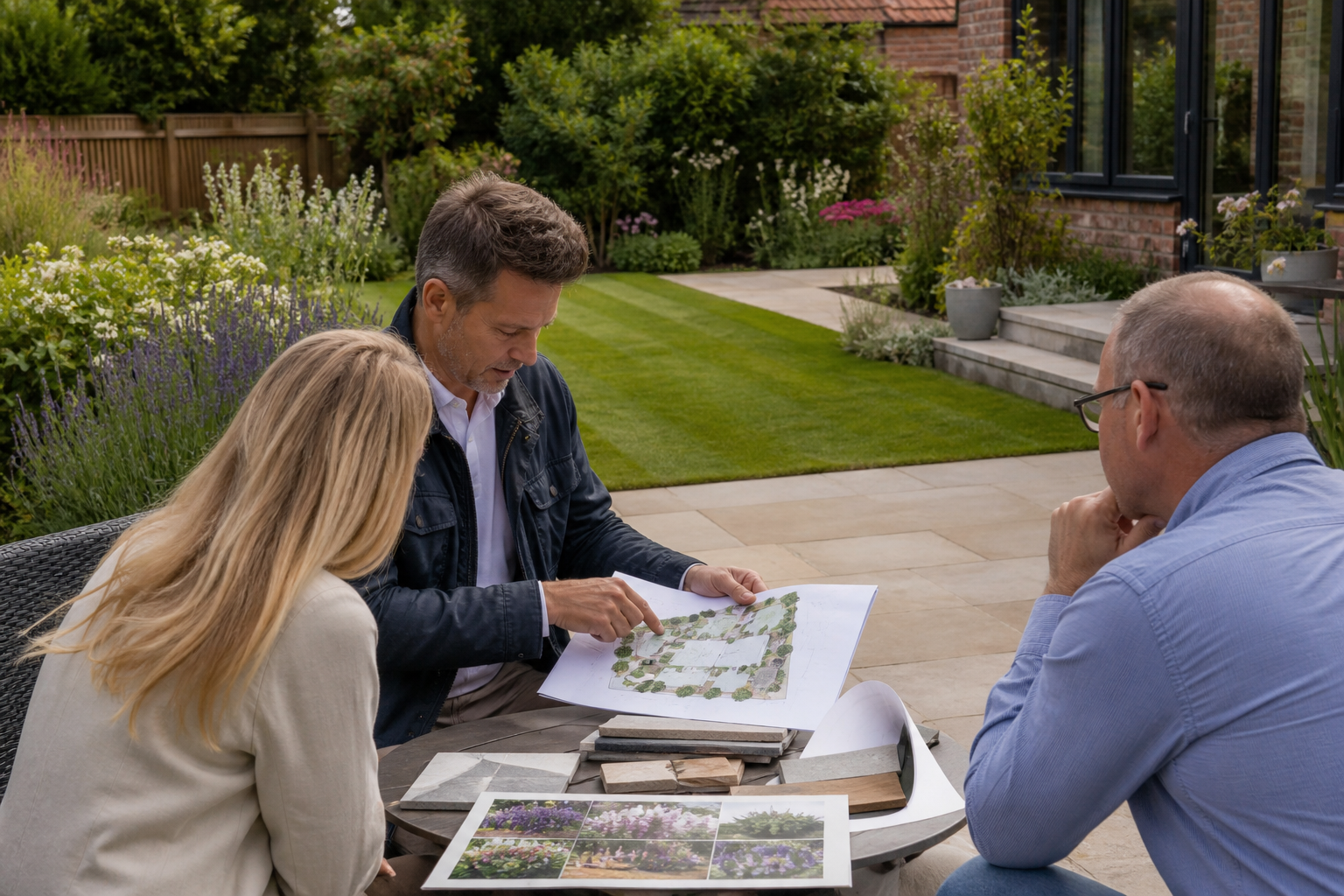
At CB Garden Designs Ltd, we offer a fully managed service for clients who want clear direction from concept to completion. Because we handle both design and landscape construction, we can consider the visual side of the project alongside the practical build requirements from the start.
Design consultation: We begin by discussing your ideas, priorities and how you want to use the garden.
Concept development: We can provide mood boards and detailed visual concepts to help shape the direction of the renovation.
Joined-up planning: Materials, planting, boundaries, lighting and practical build elements are considered as one scheme rather than separate jobs.
Construction and project management: We take the project from design concepts through to construction and completion, with in-house project management throughout.
Finishing and completion: Final planting and detailing help ensure the garden feels complete, balanced and ready to enjoy.
Our work is shaped by quality craftsmanship, attention to detail, specialist planting knowledge and 10 years of industry experience. That approach is especially valuable when several parts of the garden need to change at once.
You can explore more about our full garden renovations and wider landscaping service on our website.
Common mistakes to avoid when planning a renovation
Starting with materials instead of layout: It is easy to focus on slabs, fencing styles or lawn finishes too early. The layout should come first.
Making the patio too small: A patio may look fine on paper but feel cramped once furniture is in place. Usability matters.
Leaving drainage until later: Groundwork is part of the success of the project, not an optional extra.
Treating planting as a finishing extra: Planting has a major impact on the final look and should be planned alongside the hard landscaping.
Mixing features without a clear overall style: Good renovations feel cohesive because every element is working towards the same result.
When a full renovation makes more sense than smaller updates
A complete garden renovation is often the better option when:
Several areas of the garden need attention at the same time
The current layout feels awkward, dated or underused
You want a more cohesive finish rather than separate improvements over time
You need help redesigning a tired or failed garden
You want a space that better suits your home and current lifestyle
If that sounds familiar, starting with a proper design consultation usually gives you more clarity and a more efficient route forward.
FAQs About Planning a Garden Makeover in Orpington
What does a full garden renovation usually include?
A full garden renovation can include design work, patios or paving, fencing, decking, planting schemes, lawns, drainage, lighting, walling, terracing and finishing details. The exact scope depends on the condition of the existing garden and what you want the new space to achieve.
How do I plan a garden makeover in Orpington properly?
Start with the whole layout rather than one individual feature. Think about how you want to use the space, then consider access, seating, privacy, planting, lawn areas, materials, drainage and lighting as part of one joined-up plan. Working with a specialist can make those decisions clearer and more consistent.
Can you redesign a garden that has not worked as expected?
Yes. We carry out redesigns of failed gardens as well as complete transformations. If the space feels impractical, disjointed or unfinished, a fresh design-led approach can help create a more coherent result.
Should planting and lighting be included from the start?
Usually, yes. Both planting and lighting have a major effect on the final result. Including them early helps balance the overall design and allows practical details to be considered during the build.
How do I choose between natural turf and artificial grass in a renovation?
The decision depends on how the garden will be used, the level of maintenance you want and the style of the overall design. Some homeowners prefer the feel and character of real grass, while others want a lower-maintenance surface. The right answer is the one that works best for the whole garden.
Start with a clear design direction
A successful garden renovation is not just about replacing tired features. It is about creating an outdoor space that feels cohesive, practical and well considered from the ground up.
At CB Garden Designs Ltd, we provide bespoke garden design, landscaping and complete garden renovations in Orpington with a fully managed approach from initial concepts to final completion. If you are ready to move your ideas forward, book a garden design consultation and take the next step towards a garden designed to suit your home and lifestyle.
Comments